
Running a Sex Offender Check in Hudson County
The New Jersey Sex Offender Internet Registry is the official public starting point. The New Jersey State Police State Bureau of Identification manages the system and reviews data submitted through county prosecutor offices. Choose a name search when a person is known. Choose a location search to review a Hudson County city, ZIP code, street address, or nearby area. The registry's warning gate must be accepted before any results appear.
A Hudson County registry result is an awareness tool, not a full criminal history. Some Tier 2 records are withheld from Internet publication under statutory exceptions, and Tier 1 records ordinarily are not published online. A person may also have moved, changed a vehicle, or corrected an identifier since the last display update. Record the profile details and use the listed agency channel for a question about current registration. Only fingerprints can confirm that a result belongs to a particular person.
Note: An empty Hudson County result does not establish that no registrant lives nearby or that a named person has no qualifying record.
Hudson Registry Search Paths
Name and place searches answer different questions. A name query works best when the spelling and identity are already known. Add a first name to narrow a common surname, but do not treat a similar photo or age as positive identification. A location query is better for community awareness near a home, school route, park, or family gathering place. It can use a Hudson County municipality, ZIP code, street address, and a radius selected in the live form.
The national layer helps when a location or past residence crosses state lines. The National Sex Offender Public Website links participating state, territorial, and tribal public registries in one search. Its official interface is shown below.
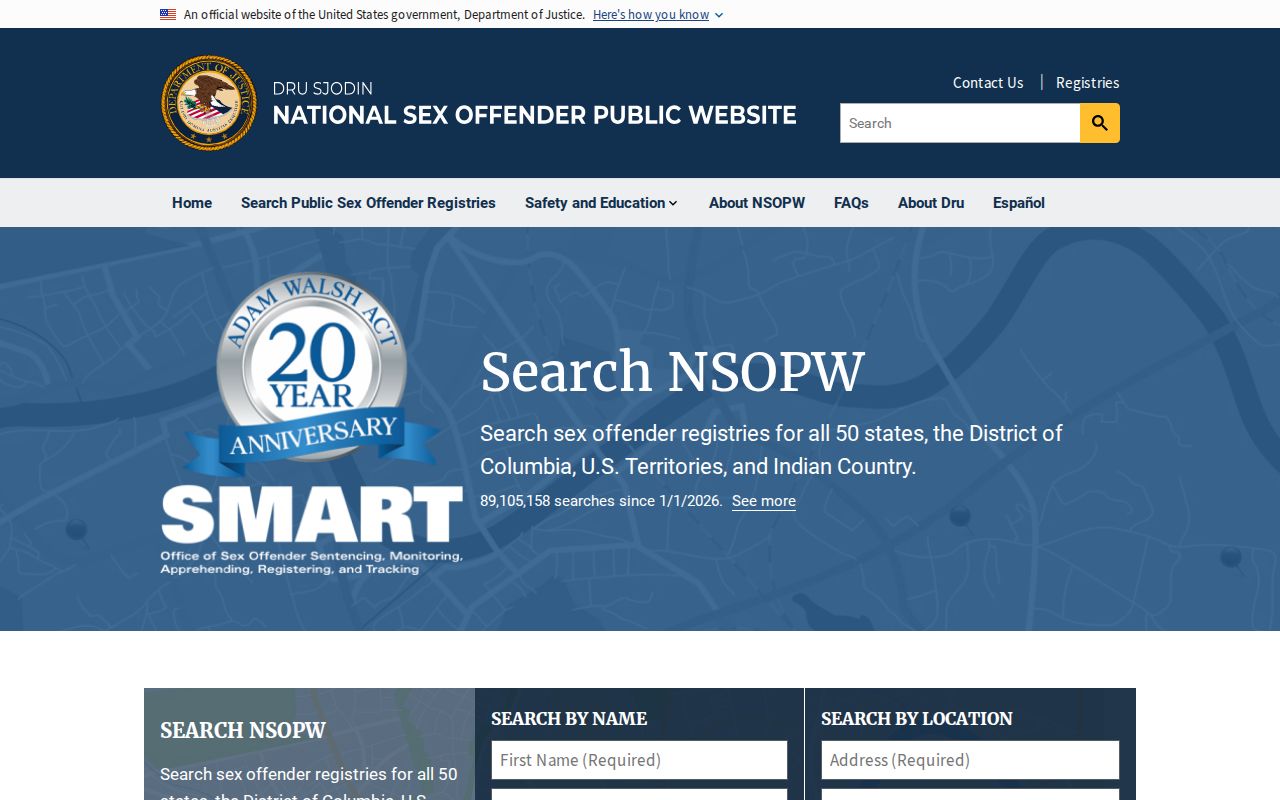
NSOPW broadens a search beyond New Jersey, but the NJSP profile remains the primary source for New Jersey-specific fields, tier treatment, and legal notices.
Searching the New Jersey Sex Offender Internet Registry
Work from the state interface in a set order. The live application is JavaScript driven, and its exact radius options can change. Use the choices displayed at search time instead of relying on an old screenshot. Hudson County can be selected in the county control, while a city, ZIP code, or address can focus the location route.
- Open the NJSP registry and read the accuracy and lawful-use notice. Accept the warning to reach the search controls.
- Select Search by Name for a known person or Search by Location for Hudson County neighborhood awareness.
- Enter the strongest known fields. Use county, city, ZIP, address, and the live radius choice only as the interface permits.
- Review the list or map, open the relevant profile, and confirm concerns through the listed law-enforcement channel rather than approaching anyone.
| Field Label | Type | Required | Notes |
|---|---|---|---|
| Warning acknowledgment | Consent button | Yes | Accepts the use and accuracy notice |
| Search by Name | Tab | Conditional | Opens the person-search route |
| Last Name | Text | Conditional | Use the live interface to verify match behavior |
| First Name | Text | No | Narrows a name search |
| Search by Location | Tab | Conditional | Opens geographic controls |
| Address, City, County, ZIP | Text or select | Conditional | County list includes Hudson |
| Radius | Select | Conditional | Use the values shown in the current form |
| Search; Clear/Reset | Buttons | Action | Runs or clears the query |
Save the identifying details that support a careful comparison, but do not copy or circulate more profile data than a real safety need requires. Return to the live NJSP record before relying on an older saved result.
Hudson Registry Identity Limits
A name, picture, age, or address can help distinguish results, but none is conclusive. The registry itself warns that fingerprints are the only method of positive identification. Similar names are common across Hudson County's twelve municipalities, and a photo may not reflect a recent change in appearance. Compare aliases, physical description, offense information, vehicle data, and the date attached to the photograph before drawing any conclusion.
The public profile fields arise from New Jersey law. The official public-profile statute identifies the categories that may be displayed.
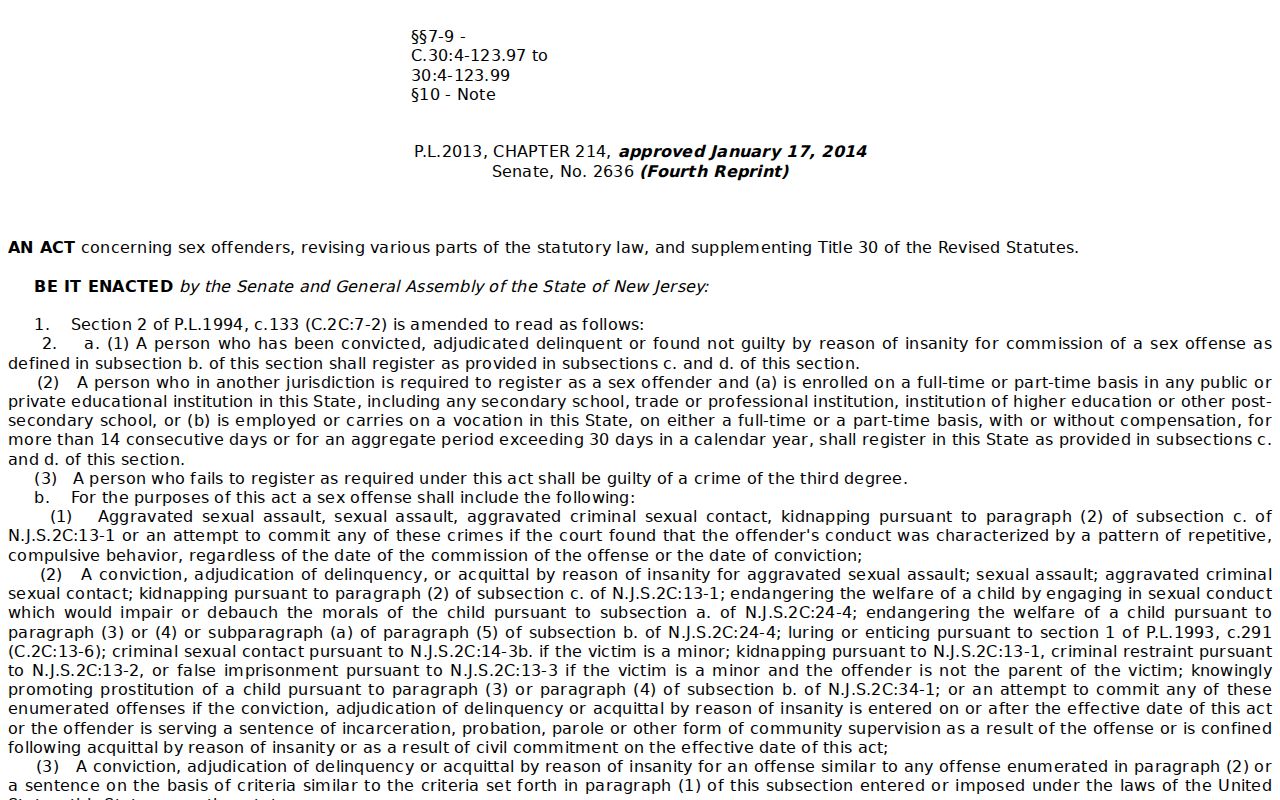
This statutory framework explains why the profile contains detailed identity and offense fields while still omitting records that are not part of the lawful Internet-public subset.
What a Registry Profile Shows
A public Hudson County registry profile combines identity, offense, risk, address, and vehicle details. Each field has limits. The offense description may be brief, the address can change, and the photo carries its own entry date. Victim information is restricted to general categories such as gender and whether the victim was under a stated age. The portal does not publish a full court file or every fact gathered by police.
| Name & Aliases | Published name and known aliases used to distinguish records |
|---|---|
| Photo & Physical Description | Photo and entry date, age, race, sex, birth date, height, weight, hair, eyes, scars, and tattoos |
| Registered Address | Street address, ZIP code, municipality, and county as authorized for publication |
| Offense Details | Qualifying offense, disposition date and place, brief description, and limited victim categories |
| Risk Information | Moderate or high-risk finding tied to public notification scope |
| Vehicle Details | Make, model, color, year, and license plate when included |
For the underlying prosecution, the court record is a separate product. It may contain charging papers, motions, plea or trial events, disposition, and sentence information that a registry profile does not reproduce.
Hudson Tier and Notification Review
Registration begins with the chief of the municipal police department where the person resides, or with NJSP where no local force exists. The Hudson County Prosecutor then evaluates tier and community-notification scope under the Attorney General Guidelines, subject to court review. Tier 2 notice may reach schools, licensed day care centers, camps, and registered community organizations likely to encounter the person. Tier 3 expands notice to members of the public likely to encounter the person.
The official county prosecutor and victim-service directory provides the Hudson County prosecution contact route.
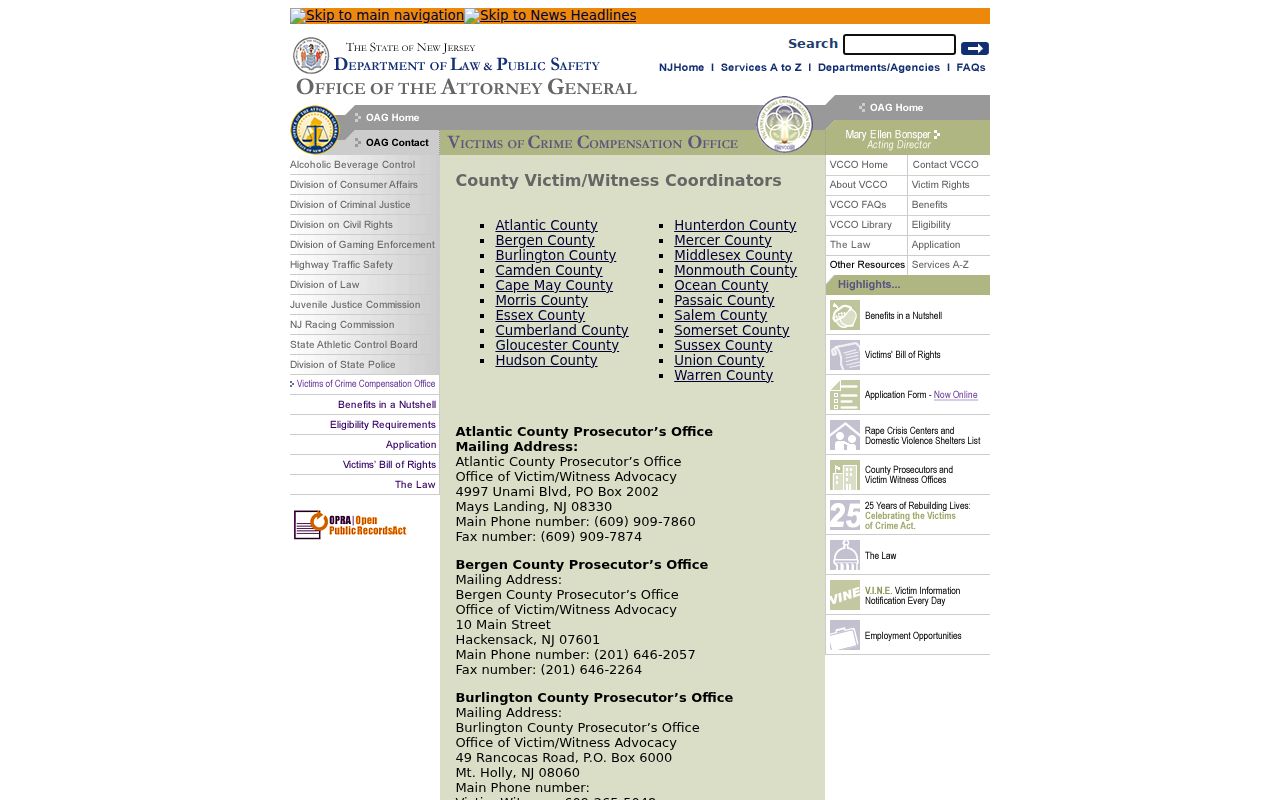
The prosecutor's role helps explain why a local police registration does not automatically mean the profile will appear online. Risk tier, statutory public scope, and judicial review all affect notification.
Registration Requirements and Levels in New Jersey
New Jersey tiers measure reoffense risk and set notification scope. They do not create a federal-style 15-year, 25-year, or lifetime duration schedule. State registration is presumptively for life across tiers. Most registrants verify annually, while a person found repetitive and compulsive generally verifies every 90 days. A registrant must report an address change at least ten days before first living at the new address, and certain work or school changes must be reported within five days.
| Tier | Duration | Notification and Verification |
|---|---|---|
| Tier 1, low risk | Presumptively lifetime | Law enforcement notice; ordinarily not Internet-public; verification generally annual |
| Tier 2, moderate risk | Presumptively lifetime | Law enforcement and likely-to-encounter organizations; many profiles public, with statutory exceptions |
| Tier 3, high risk | Presumptively lifetime | Tier 2 recipients plus likely-to-encounter public; publicly searchable |
Note: Tier controls risk and notice, while verification frequency can also depend on a separate finding about repetitive and compulsive conduct.
Hudson Registration Termination Route
N.J.S.A. 2C:7-2(f) permits some registrants to apply to Superior Court after 15 offense-free years, measured from conviction or release from incarceration, whichever is later. The applicant must show no offense during that span and prove they are not likely to pose a threat to others. Some offenses and registrants are excluded, so the passage of time alone does not end registration. Relief requires a court order, not a request to remove a web page.
A 2024 New Jersey Supreme Court development changed the analysis for a class of juvenile registrants. The New Jersey Office of the Public Defender's decision update describes that result.
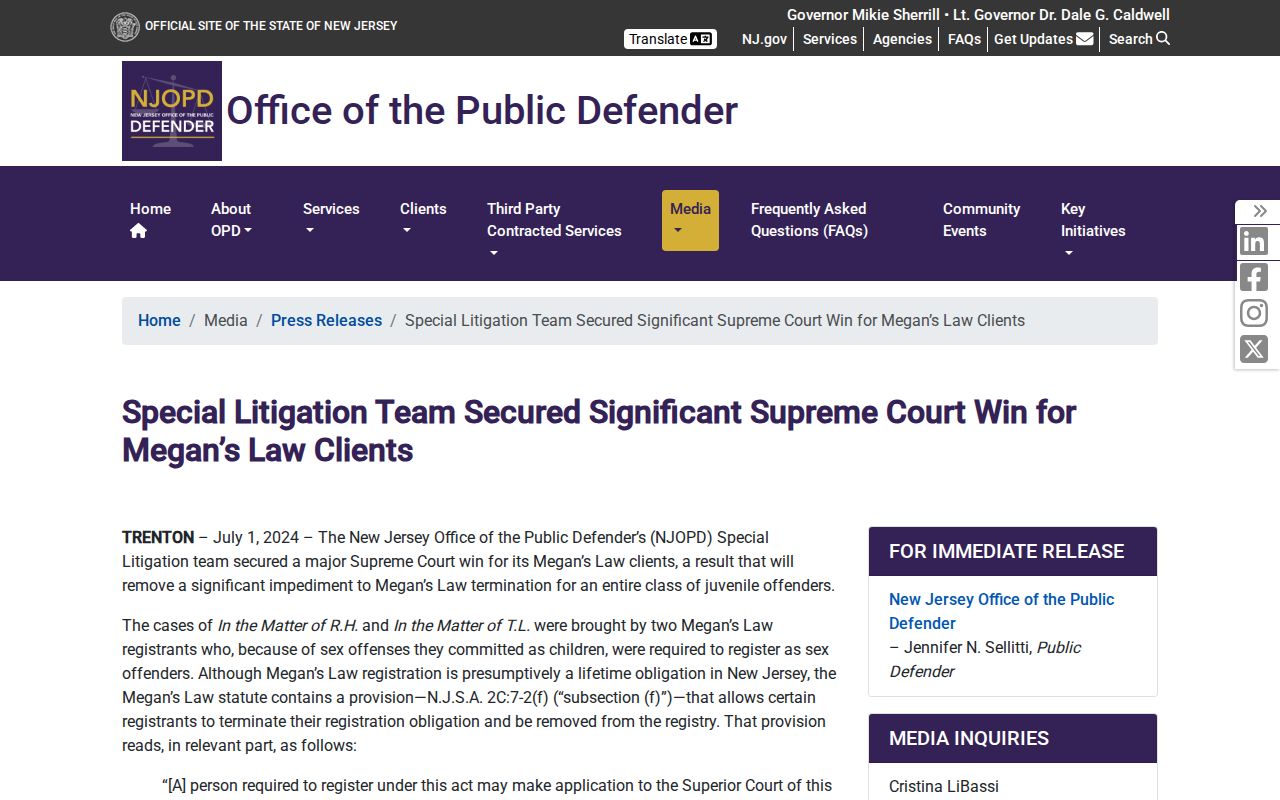
The decision illustrates why current case law matters in a termination petition. A person seeking relief should use the court and counsel channels that apply to their own case rather than assume a general rule fits every record.
Lawful Use and Community Notification
The registry exists for public-safety awareness. If a Hudson County resident suspects that a registrant has failed to report an address or other required change, the safe route is the police department for the relevant municipality. Use 911 only when there is an emergency. Do not visit the address, question neighbors in a threatening way, publish extra personal details, or attempt to enforce registration rules.
Registry misuse is a crime: N.J.S.A. 2C:7-16 makes using registry information to commit a crime a third-degree crime. Using it to commit a disorderly-persons or petty-disorderly-persons offense adds an offense and a $500 to $1,000 fine. Never harass, threaten, confront, or target a registrant or household.
Lawful community notice can differ by tier. A person who receives notice through a school, organization, police department, or public search should follow the limits that accompany it. The profile is not permission for vigilantism or discrimination. Questions about tier treatment or a criminal prosecution belong with the Hudson County Prosecutor, the relevant court, or qualified counsel.
Hudson Registry Case Counsel
Registry duties can intersect with a criminal case, a tier-review proceeding, or a petition to terminate registration. New Jersey uses the county prosecutor for indictable prosecution and notification review. The Hudson Regional Office of the New Jersey Office of the Public Defender serves eligible people in qualifying indictable matters after the court determines financial eligibility. Municipal public defenders are appointed separately for municipal cases.
The official Hudson Regional Public Defender page identifies the office at 438 Summit Avenue, Fifth Floor, Jersey City, with telephone 201-795-8922.
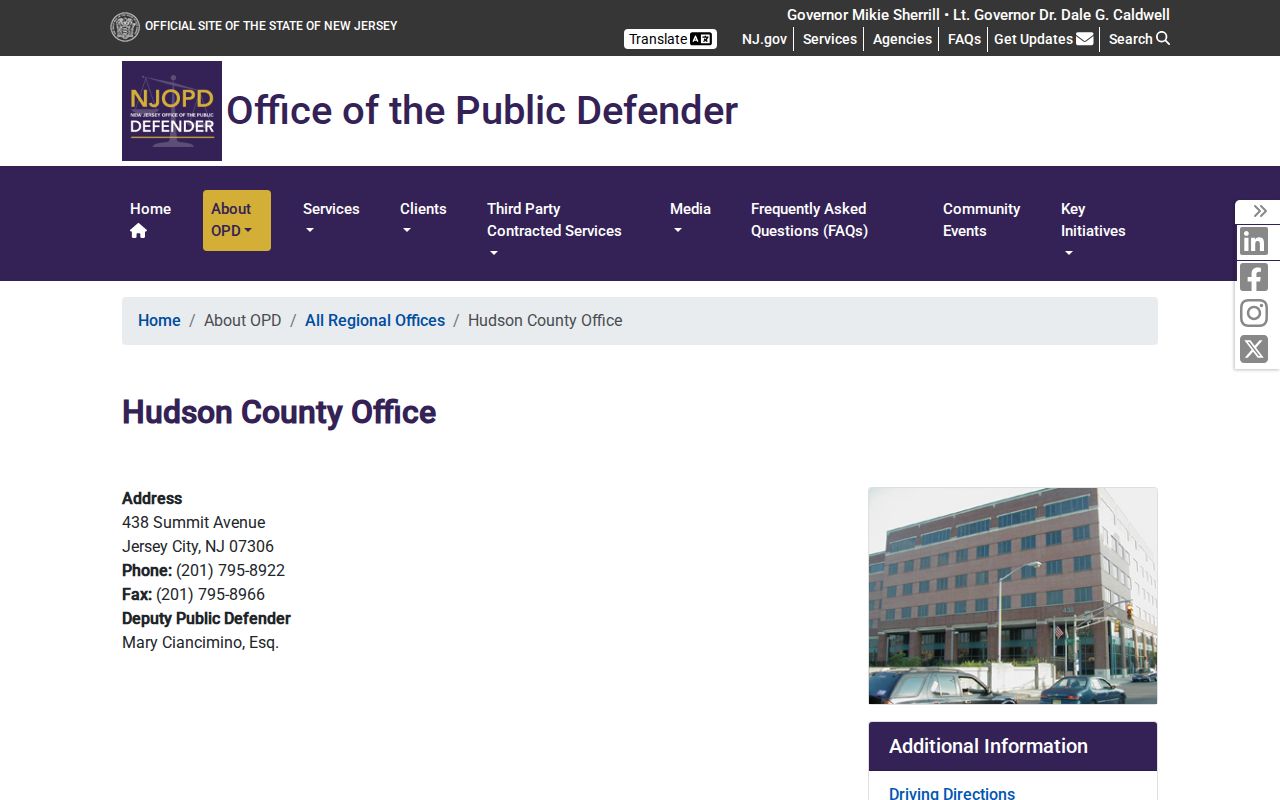
This office is not the registry custodian and cannot change a public profile on request. Its relevance is case representation where eligibility and assignment rules apply.